
Back in April we talked about How to Understand a Google Analytics Report and since then we’ve been providing a lot of Google Analytics tips. Since it’s handy to have all of our tips in one place, here is a roundup of our Google Analytics guidelines and how-tos. Following these best practices will bring you one step closer to becoming a Google Analytics pro.
Technical Basics
How to Filter Out My Internal Traffic in Google Analytics
Dec 15, 2011 Update: How to filter out internal traffic in the new Google Analytics.
Nothing skews your website analytics more than including your internal traffic. Employees’ behaviours on the site are different than visitors’ behaviours because your employees (and subcontractors) spend more time on the site and are less likely to bounce. Because Google Analytics shows many traffic behaviours as an average value, excluding your internal traffic is one way to avoid distorting your data.
How to Get Analytics Reports Sent to Your InBox
May 15, 2012 Update: How to get Analytics reports sent to your inbox in the new Google Analytics.
Setting up your Google Analytics account to deliver your reports to your Inbox is a handy way to remember to monitor your web stats.
How to Give Someone Access to Your Google Analytics
April 26, 2012 Update: How to give someone access in the new version of Google Analytics.
Google Analytics gives you the ability to add users to your account and to grant them different levels of access. This is useful for when you want to share access with others in your company or when you hire an outside consultant who would benefit from looking at your web stats (like us).
Techniques for Tracking Campaigns
How to Use Analytics Annotations to Track Your Marketing Campaigns
Google Analytics’ Annotations feature is a really useful tool that doesn’t get used as much as it should. It’s an easy feature to apply and it’s great for measuring the success of your marketing campaigns because it creates an activity timeline that positions your marketing activities in relation to your website traffic. Annotations are extremely useful for creating benchmarks and measuring and tracking your marketing campaigns.
How to Use Google’s Advanced Segments
February 10, 2012 Update: How to use Advanced Segments in the new version of Google Analytics.
Analytics’ Advanced Segments tool allows you to segment your website users into separate, defined channels to see how different audience groups are interacting with your site. The ability to analyze your reports by particular user groups and compare one traffic channel to another is extremely useful and helps to make your Analytics reports more meaningful.
And if you missed April’s post, here’s How to Understand a Google Analytics Report, which includes a breakdown of a standard monthly report and what the numbers mean.

Crissy was Boxcar Marketing’s project manager from May 2009 to December 2012. She handled much of our day-to-day business, including working with clients directly on editorial calendars, weekly online activity plans, social media training and outreach opportunities. Crissy holds a Master of Publishing degree and before Boxcar Marketing, she worked at the Fraser Valley Regional Library where she specialized in the development and execution of promotional campaigns to drive traffic to regional library locations. Fun Facts Crissy has seen the sun rise on the Mekong River. She took Japanese in high school. She could beat adults at Memory when she was 5. Crissy loves wine and board games. Together when possible.

How to Track AI Traffic in GA4: A 1-Minute Marketing Tip

AI Use in Publishing & Marketing: What 24 Practitioners Told Us
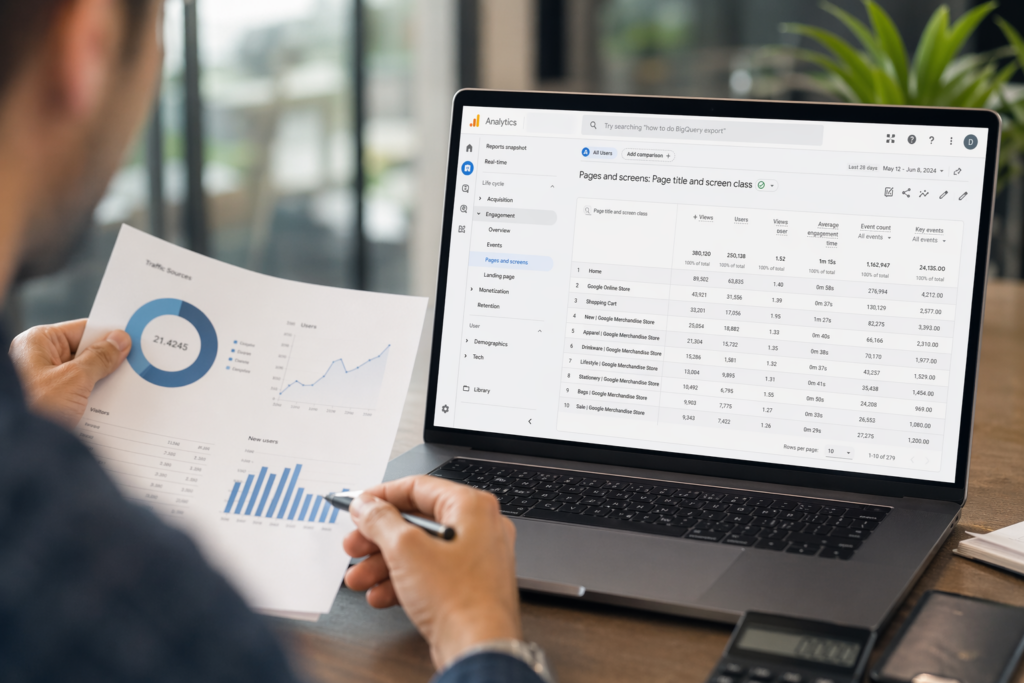
How to See Which Pages Are Performing Best in GA4

How to Diagnose Search Traffic Loss (SEO & GEO)

Ways to Support Author Marketing